

Couple fighting and about relationship problems
Everyone deserves relationships free from domestic abuse.
What are the six parts of a common pattern of domestic abuse?
Six distinct stages make up the cycle of violence: the set-up, the abuse, the abuser’s feelings of “guilt” and his fear of reprisal, his rationalization, his shift to non-abusive and charming behavior, and his fantasies and plans for the next time he will abuse.
What justifies as domestic violence?
Domestic abuse and violence comes from a belief system that tells the abusive person that they have the right to control their partner, and that they are justified in using whatever means necessary to maintain that control.
Demeaning remarks hurt just as much as a slap in the face. Not all abuse is physical. All abuse is painful.
What is domestic violence in simple terms?
Domestic abuse, also called “domestic violence” or “intimate partner violence”, can be defined as a pattern of behavior in any relationship that is used to gain or maintain power and control over an intimate partner.
What behaviors are considered abuse?
Examples include intimidation, coercion, ridiculing, harassment, treating an adult like a child, isolating an adult from family, friends, or regular activity, use of silence to control behavior, and yelling or swearing which results in mental distress.
Why do people stay in toxic relationships?
A lot of people in abusive relationships stay in them because they love their partner and think that things will change. They might also believe their partner’s behavior is due to tough times or feel as though they can change their partner if they are a better partner themselves.
The reluctance to leave may be because of financial situations. The abused party may think they can’t make it on their own. Perhaps you can receive help.
Ty Zdravko practices law as a divorce attorney, and family law attorney in Palm Harbor, Clearwater and the surrounding area.
For more information, visit our website at www.divorceboardcertified.com
or call (727) 787-5919.
 Plan the Time
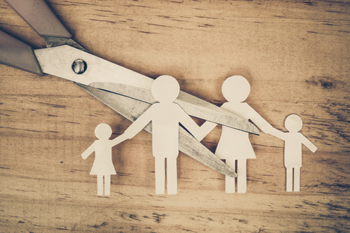 In a divorce case, the court divides the marital assets of the parties involved and issues a divorce decree. In addition, they may award ongoing payments from one party to the other based on one party’s need and the other party’s ability to pay. This is called alimony or spousal support.
 ou can get a divorce in Florida without an attorney. Should you do that? Probably not. For one thing, divorce is an emotional experience. Your emotions can cloud your judgement, particularly if there is anger or a need for revenge involved. The results of the divorce may be irreversible, and can have serious consequences. Are cost savings that important when discussing the custody of your child?
 Under Florida law, alimony is granted to a spouse and it can be awarded to bridge the gap, be rehabilitative, i.e., intended to get the person to a position where he or she can take care of expenses without assistance, durational, or permanent.
 We really hope people can make their relationships work without divorce. But making a relationship work takes work. One area that is really critical is your communications. If your communications are not going well, consider trying some new ideas.
 Did you know there was such a thing as permanent alimony? Florida permanent alimony is periodic payments of financial support paid to an ex-spouse for an indefinite duration. The purpose of Florida’s permanent alimony law is not to divide future income. Further, permanent alimony is typically only awarded upon the divorce of a long-term marriage.
 Getting a divorce can be an extremely difficult time when everything is going well. It can be even more some when one of the parties has difficulty earning a living. In some cases, one of the parties to a marriage has forgone pursuing a career to support his or her spouse or may have left the workforce early to raise a family or manage the marital home. Certainly, in this case, it may make sense that the primary wage earner be of assistance to the homemaker.